
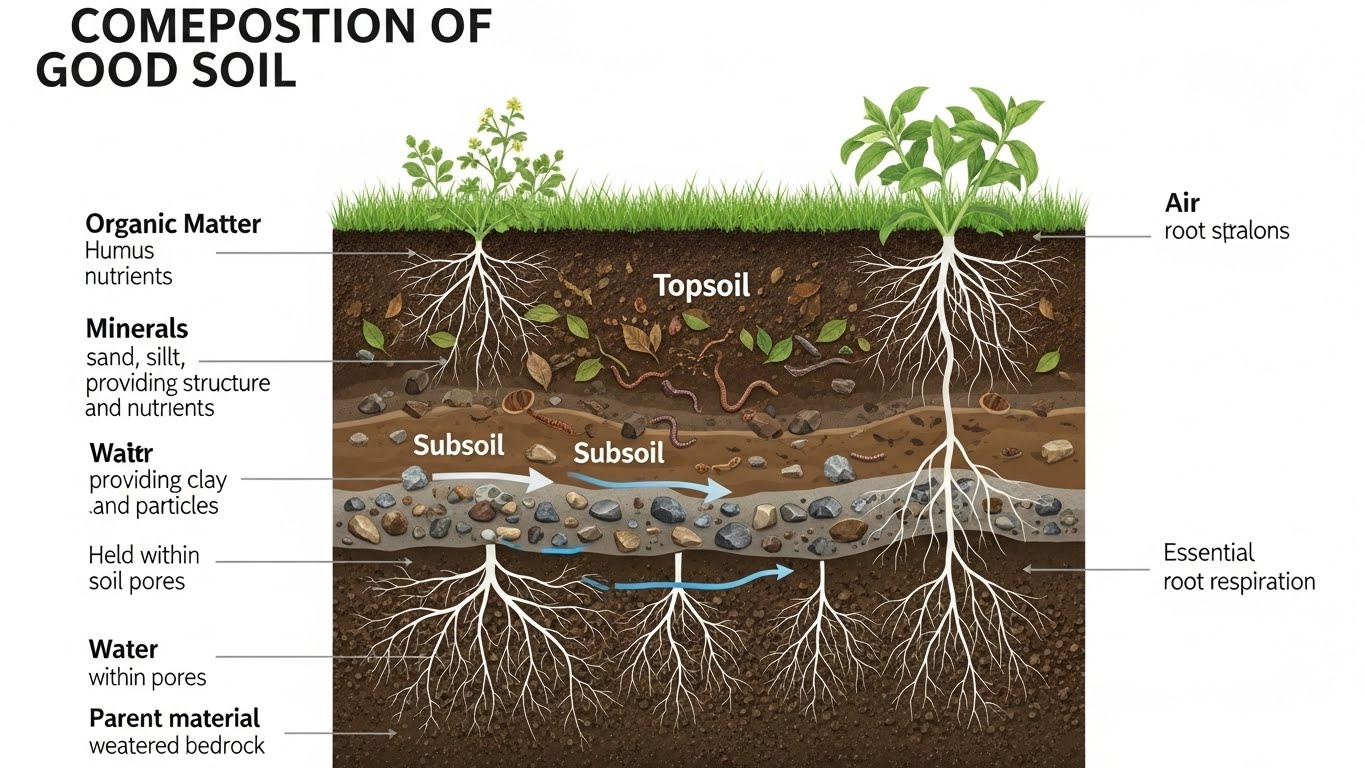
Understanding what is good soil is essential for anyone interested in gardening, farming, landscaping, or environmental sustainability. Soil is more than just dirt beneath our feet; it is a living system that supports plants, microorganisms, and entire ecosystems. Good soil directly influences plant health, crop yield, water retention, and even climate resilience. Without it, food production and natural balance would not be possible.
When people ask what is good soil, they are often looking for more than a definition. They want to know how soil supports life, how it should feel and look, and how it can be improved. This article explores the true meaning of good soil, its characteristics, types, benefits, and ways to maintain it for long-term productivity.
What Is Good Soil in Simple Terms
To understand what is good soil, it helps to see soil as a balanced mixture of minerals, organic matter, air, water, and living organisms. Good soil provides plants with nutrients, allows roots to grow freely, and holds moisture without becoming waterlogged. It also supports beneficial microbes that help plants absorb nutrients more efficiently.
Healthy soil has structure, meaning it forms small clumps that allow water and air to move through easily. This structure prevents erosion and compaction, two common problems in poor-quality soil. When soil lacks balance, plants struggle even if fertilizers are added, which is why natural soil health matters more than quick fixes.
The Physical Characteristics That Define What Is Good Soil
One of the most noticeable aspects of what is good soil is its physical quality. Texture, structure, and color all provide clues about soil health. Soil texture refers to the proportion of sand, silt, and clay. Good soil usually has a loamy texture, which combines the best qualities of all three.
Loamy soil feels slightly crumbly in the hand, drains well, and still retains enough moisture for plant roots. Color also matters. Dark soil often indicates high organic matter, which improves fertility and water retention.
The table below explains how physical properties influence soil quality.
| Soil Property | Description | Impact on Plant Growth |
|---|---|---|
| Texture | Balance of sand, silt, and clay | Controls drainage and root penetration |
| Structure | Arrangement of soil particles | Improves airflow and water movement |
| Color | Ranges from light to dark | Darker soil usually means higher fertility |
| Porosity | Space between particles | Supports oxygen and water availability |
These physical traits work together to create soil that can support strong and healthy plant systems.
Chemical Balance and What Is Good Soil Health
Another important aspect of what is good soil lies in its chemical composition. Soil must contain essential nutrients such as nitrogen, phosphorus, potassium, calcium, and magnesium. These nutrients must also be available in the right proportions. Too much of one element can block the absorption of another.
Soil pH plays a critical role in nutrient availability. Most plants thrive in soil that is slightly acidic to neutral. When soil becomes too acidic or too alkaline, nutrients remain locked in the soil and plants cannot absorb them, even if they are present in large amounts.
The following table shows how soil pH affects nutrient availability.
| Soil pH Range | Soil Condition | Nutrient Availability |
|---|---|---|
| Below 5.5 | Strongly acidic | Nutrients become limited |
| 5.5 to 7.0 | Slightly acidic to neutral | Ideal for most plants |
| Above 7.5 | Alkaline | Some nutrients become unavailable |
Maintaining chemical balance is a key part of sustaining long-term soil health and productivity.
Biological Life and What Is Good Soil Functionality
To truly understand what is good soil, one must look beneath the surface at the living organisms within it. Healthy soil is alive with bacteria, fungi, earthworms, insects, and other microorganisms. These organisms break down organic matter, recycle nutrients, and improve soil structure.
Microbial activity is especially important because it transforms organic material into forms plants can absorb. Fungi create networks that help plant roots access water and nutrients beyond their immediate reach. Earthworms improve aeration and drainage by creating natural channels through the soil.
Without biological life, soil becomes lifeless and compacted. This is why good soil is not sterile; it is dynamic and constantly changing.
Types of Soil and What Is Good Soil for Different Uses
Different plants and environments require different soil types, but the core principles of what is good soil remain the same. Sandy soil drains quickly and warms up fast but often lacks nutrients. Clay soil holds nutrients well but drains poorly. Silt soil is fertile but easily compacted.
Loam is generally considered the ideal soil because it balances drainage, fertility, and structure. However, what qualifies as good soil can vary depending on whether it is used for vegetables, flowers, trees, or crops.
The table below compares common soil types and their suitability.
| Soil Type | Key Features | Suitability |
|---|---|---|
| Sandy Soil | Fast drainage, low nutrients | Good for root crops with amendments |
| Clay Soil | High nutrients, poor drainage | Suitable with proper aeration |
| Silt Soil | Smooth texture, fertile | Ideal with erosion control |
| Loam Soil | Balanced texture and nutrients | Best for most plants |
Understanding soil type helps in making better decisions about amendments and plant selection.
Why Organic Matter Defines What Is Good Soil
Organic matter is one of the strongest indicators of what is good soil quality. It includes decomposed plant material, compost, and natural residues that enrich the soil. Organic matter improves structure, increases water retention, and provides food for microorganisms.
Soil rich in organic matter resists erosion and recovers faster from drought or heavy rainfall. It also reduces the need for chemical fertilizers by slowly releasing nutrients over time. Farmers and gardeners who prioritize organic matter often experience healthier plants and better yields.
Adding compost regularly is one of the simplest ways to improve soil quality naturally.
Water Retention and Drainage in What Is Good Soil
Water management is a defining feature of what is good soil. Soil must hold enough water to supply plant roots while allowing excess moisture to drain away. Poor drainage leads to root rot, while dry soil causes stress and nutrient deficiency.
Good soil acts like a sponge. It absorbs water during rainfall and releases it slowly during dry periods. This balance protects plants from extreme conditions and reduces the need for frequent irrigation.
Healthy structure and organic matter are the main factors that help soil achieve this balance naturally.
Long-Term Benefits of Understanding What Is Good Soil
Recognizing what is good soil goes beyond plant growth. Healthy soil supports biodiversity, improves food quality, and helps store carbon, reducing environmental impact. It also lowers maintenance costs by minimizing fertilizer and water use.
In agriculture, good soil leads to sustainable yields and protects land for future generations. In home gardens, it creates stronger plants with fewer pests and diseases. Soil health is not a short-term goal but a long-term investment.
How to Maintain What Is Good Soil Over Time
Maintaining what is good soil requires consistent care rather than quick solutions. Avoiding over-tilling helps preserve soil structure. Rotating crops prevents nutrient depletion. Adding organic matter keeps soil alive and productive.
Protecting soil from erosion through mulching or ground cover also plays a crucial role. These practices work together to maintain balance and ensure soil remains fertile year after year.
Good soil is not created overnight, but with patience and proper care, it becomes stronger and more resilient over time.
Conclusion on What Is Good Soil
Understanding what is good soil is fundamental to successful plant growth and environmental sustainability. Good soil is balanced physically, chemically, and biologically. It supports plant roots, retains water, supplies nutrients, and hosts living organisms that maintain natural cycles.
Whether for farming, gardening, or ecological conservation, investing in soil health leads to long-lasting benefits. When soil is healthy, everything that depends on it thrives naturally.