
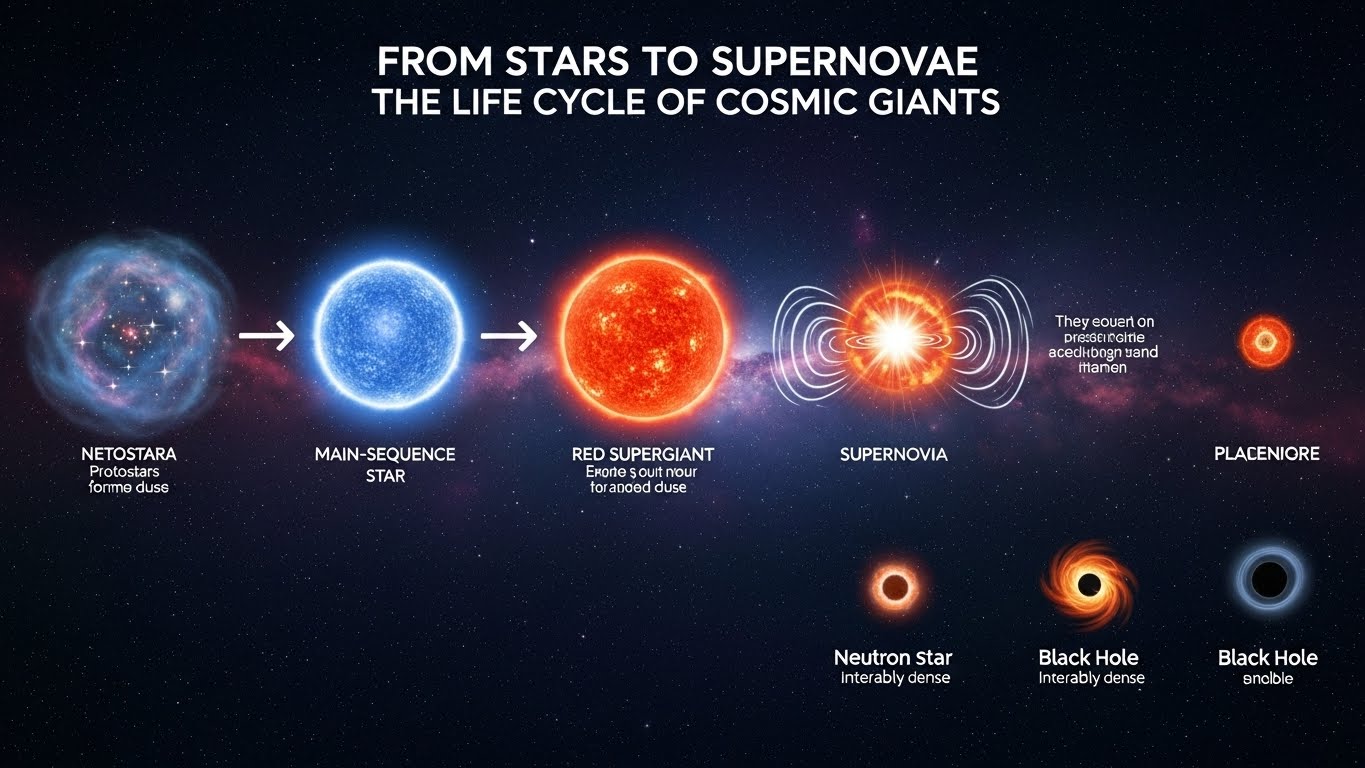
The universe is a grand stage filled with cosmic giants, from the humblest of stars to the explosive supernovae that light up the night sky. Each celestial body has its own life cycle, marked by incredible transformations and breathtaking phenomena. If you’ve ever gazed at the twinkling stars and wondered about their stories, you’re in for an illuminating journey. From birth to death, every star’s path leads toward spectacular explosions known as supernovae—events so powerful they can outshine entire galaxies! Join us as we explore this captivating life cycle of cosmic giants and uncover some recent discoveries that push our understanding further than ever before.
Watch at home
Stargazing from home has never been easier. With the right tools and apps, you can explore the cosmos without stepping outside. Virtual planetariums offer stunning visuals of stars, planets, and even supernovae—all from your living room.
You don’t need to be an expert astronomer to enjoy this cosmic journey. Many resources provide guides on how to identify different celestial phenomena, including those spectacular explosions that captivate our imagination. You can follow along with experts who explain each event in detail.
Whether it’s a clear night or a cozy evening indoors, there are numerous documentaries and live streams showcasing incredible cosmic events happening across the universe. Grab some popcorn and prepare for an unforgettable experience as you dive into the wonders of space!
Showtimes for
If you’re eager to witness the spectacle of a supernova, mark your calendars. The excitement is building as theaters roll out showtimes for an exclusive viewing experience. Don’t miss this chance to delve deep into the universe’s most explosive events.
Locally, many venues will host screenings that allow enthusiasts and curious minds alike to explore cosmic phenomena like never before. Take a peek at your favorite cinema’s schedule so you don’t miss out on any celestial wonders unfolding on screen.
Grab your friends and prepare for an unforgettable night under the stars—right from your seat! With each screening offering unique insights, it’s bound to ignite passion for astronomy in everyone who attends. Get ready for an evening filled with awe-inspiring visuals and groundbreaking science!
We’ll remind you when it’s time to buy tickets for
Don’t miss out on the cosmic spectacle of supernovae! We understand how busy life can get, so we’re here to help you stay updated. Sign up for our reminders, and we’ll notify you as soon as tickets go live.
Imagine witnessing the explosive beauty of a supernova from your own home or local theater. This event promises to be both educational and breathtaking. You’ll gain insights into one of the universe’s most awe-inspiring phenomena.
Our alerts will ensure you’re among the first to secure your seat when tickets become available. Stay tuned, and prepare yourself for an unforgettable journey through space that brings the wonders of cosmic giants right to you.
Webb identifies earliest supernova to date
The James Webb Space Telescope has made a groundbreaking discovery by identifying the earliest supernova to date. This remarkable event sheds light on our understanding of cosmic evolution and the life cycles of massive stars. Observing these ancient explosions helps astronomers piece together the history of galaxies.
What makes this supernova particularly intriguing is its immediate explosion, which occurred only 400 million years after the Big Bang. Such a close glimpse into early cosmic events provides valuable insights into star formation in primordial conditions. It’s a fascinating window into an era when stars were just beginning to illuminate the universe.
Furthermore, comparisons with nearby supernovae reveal surprising similarities in their characteristics and behavior. This suggests that even across vast stretches of time and space, fundamental processes shaping stars remain consistent throughout the cosmos.
Immediate, nimble investigation of the source
When a supernova erupts, it’s like the universe sends out an urgent call for attention. Astronomers rush to respond, keen to gather as much data as possible about this cosmic event. Their immediate investigation is crucial; time is of the essence.
Using advanced telescopes and technology, scientists analyze light patterns and radiation emitted from the explosion. This nimble approach allows them to decode vital information about the supernova’s origins and its explosive aftermath. Every detail counts in piecing together this celestial puzzle.
The collaboration among different observatories enhances their ability to capture fleeting moments that could otherwise slip away into darkness. Each observation contributes uniquely, revealing insights into stellar evolution and enriching our understanding of how these magnificent explosions shape galaxies across space.
Shockingly similar to nearby supernovae
The recent discovery of a supernova has caught the attention of astronomers. What’s intriguing is its striking resemblance to nearby supernovae observed in our galaxy. This similarity raises fascinating questions about the processes driving stellar explosions.
Researchers are comparing light curves and spectra from this ancient explosion with those of well-studied events like SN 1987A, which helps them understand common characteristics among these cosmic giants. The data reveals patterns that hint at shared origins or conditions leading to their powerful eruptions.
Such parallels not only enhance our understanding of individual supernovae but also contribute to broader theories regarding stellar evolution and galactic dynamics. As we decipher these similarities, we get closer to unraveling the mysteries behind these magnificent celestial spectacles and their role in enriching the universe’s chemical diversity.
First look at supernova’s host galaxy
The recent discoveries regarding supernovae have opened a window into the vast and complex universe. With the Webb Telescope’s capabilities, we are now able to observe these cosmic giants in unprecedented detail. The host galaxies of supernovae offer invaluable insights into their life cycles.
By studying these galaxies, astronomers can trace the evolution of stars and understand how they contribute to cosmic phenomena. Each supernova tells a story not only about its explosive end but also about the environment from which it came. These interactions between stars and their host galaxies shape our understanding of star formation and galactic dynamics.